Hardback
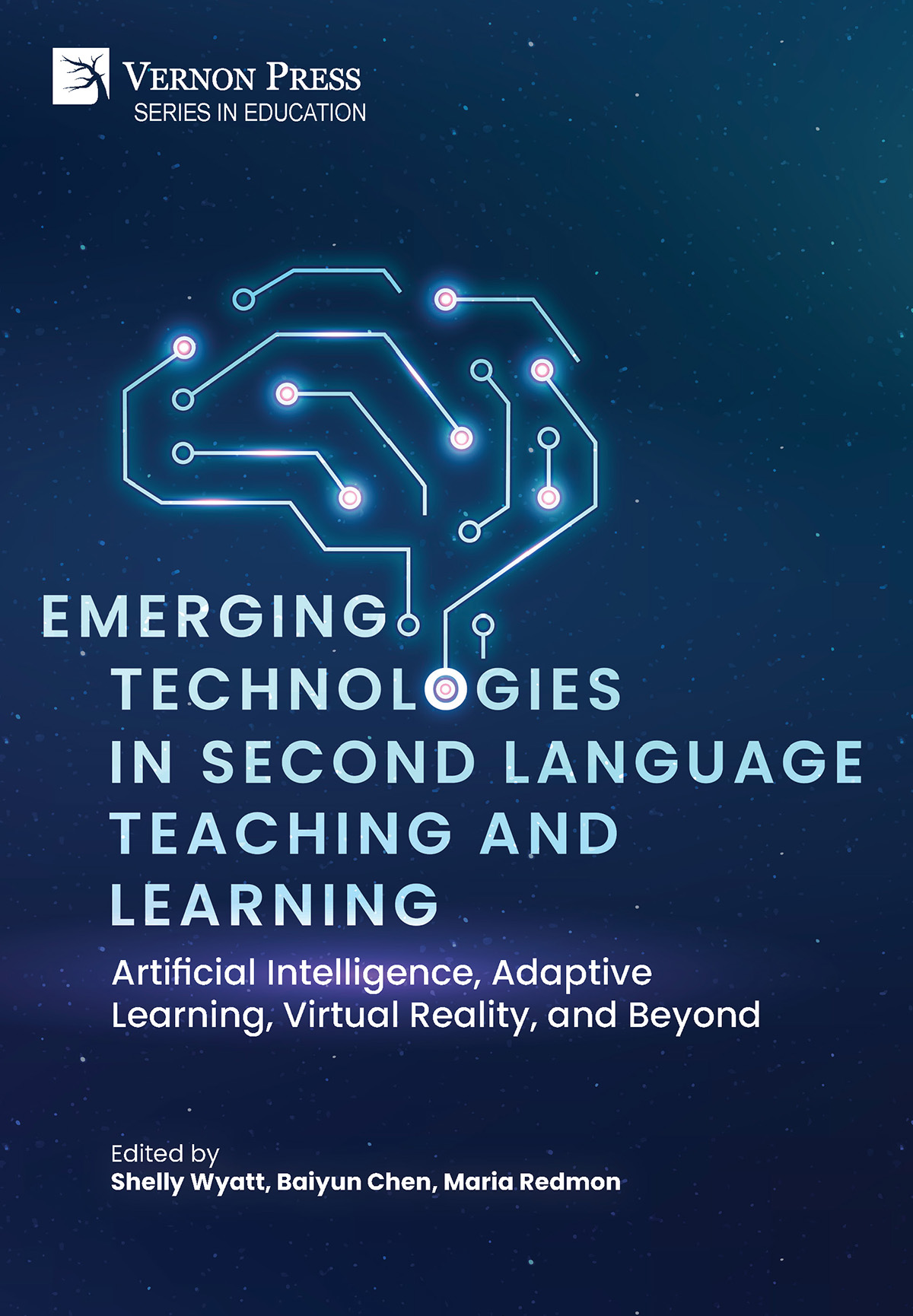
Emerging Technologies in Second Language Teaching and Learning
Artificial Intelligence, Adaptive Learning, Virtual Reality, and Beyond
Nebahat Badem, Oyinkansola Sodiya, Kacie Tartt, Anne Prucha, S. M. Sabra, Chan Wing Shan, Rebecca Bias, Kevin Richards, Samanta Buffa, Jessica Tojo-Raible, Xiaoxuan Li, Omer Ozer, Shelly Wyatt, Belle Li, Su-Je Cho, Xiaying Li, Xiaoqing Gu, Fang Cao, Jiawen Zhu, Başak Eda Hancı-Azizoğlu, Ömer Buğra Hamzaoğlu, Vera Sotirovska, Jess Smith, and Baiyun Chen
June 2026 • ISBN: 9798261600589
In stock330pp $126 €108 £94
'Emerging Technologies in Second Language Teaching and Learning' examines how artificial intelligence and other digital innovations are remaking language education across K–12 and higher education contexts. As technologies such as generative AI, adaptive learning systems, virtual reality, and digital storytelling become increasingly integrated into classrooms, educators face new opportunities—and challenges—in designing meaningful language-learning experiences.
This edited volume brings together international scholars and practitioners to explore how emerging technologies can support multilingual learners through personalized learning, immersive environments, and innovative pedagogical approaches. Grounded in established theories of second language acquisition, applied linguistics, and instructional design, the chapters combine research-based analysis with real-world classroom applications. Contributors examine topics including AI chatbots for language practice, AI-generated instructional materials, adaptive learning platforms, culturally adaptive digital storytelling, virtual reality–based language tasks, and open educational resources that expand access to language learning.
Aside from technological innovation, the volume critically addresses the pedagogical and ethical issues of AI-enhanced education. Chapters explore issues such as algorithmic bias, academic integrity, digital equity, and teacher agency, as well as the importance of maintaining human-centered learning environments in increasingly automated educational systems. Across a variety of contexts—from secondary classrooms to university language programs—the contributors highlight how instructors can thoughtfully integrate technology to enhance interaction, creativity, and communicative competence.
Integrating theory, research, and practice, this book offers a timely resource for language educators, instructional designers, teacher educators, and researchers in TESOL, applied linguistics, multilingual education, and educational technology. It also serves as a valuable guide for graduate students and academic leaders seeking responsible, evidence-informed approaches to innovation in language teaching.