Loading...
Please wait while we load the content...

Loading...
Please wait while we load the content...
The National University of Science and Technology POLITEHNICA Bucharest, Romania
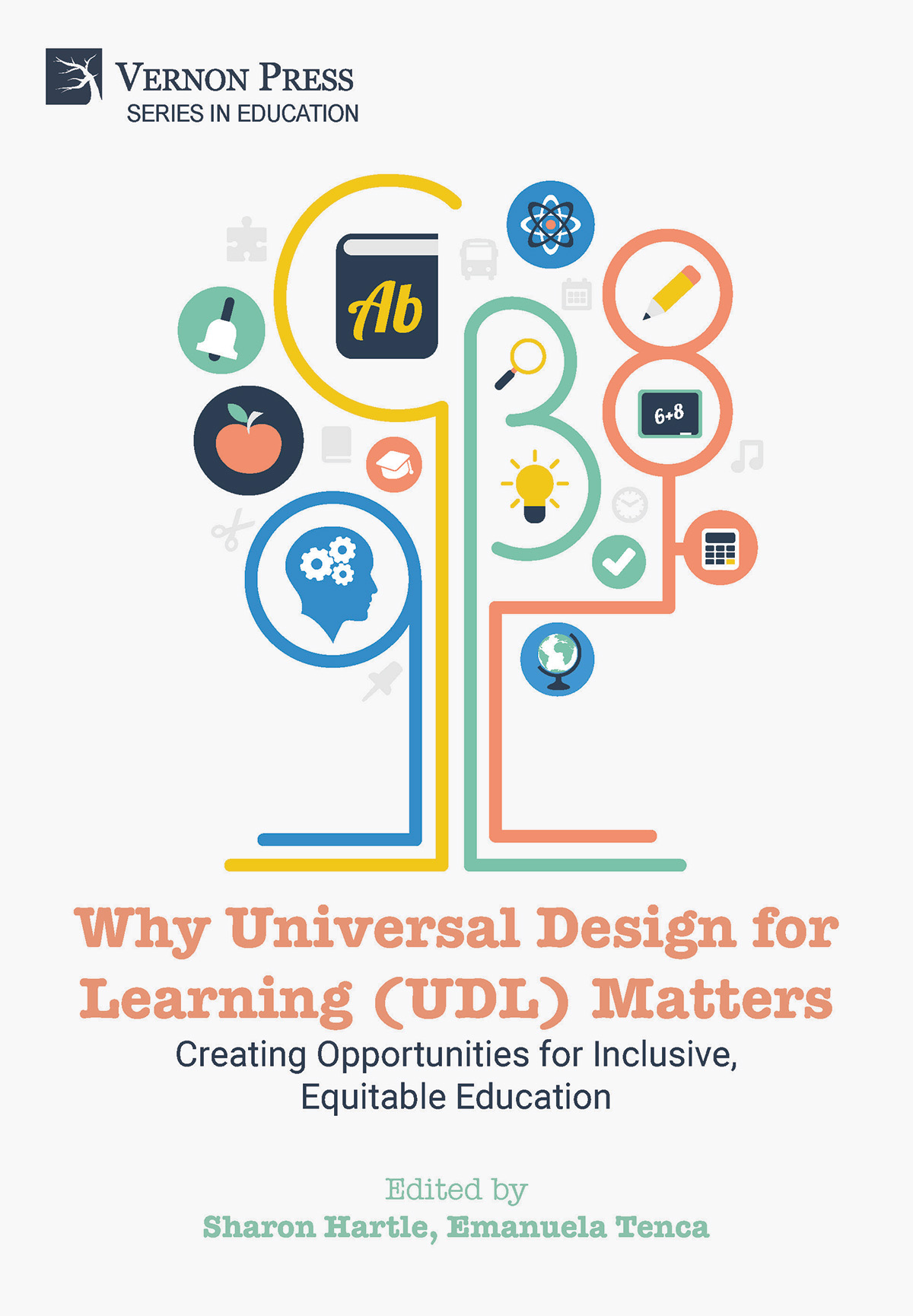
Creating opportunities for inclusive, equitable education
Nhora Paulina Parra-Ortiz, Judy Constanza Beltrán-Rojas, Jhon Alexander Garcia Camargo, Maria Vender, Serena Dal Maso, Sabrina Piccinin, Giorgia Pomarolli, Diane Montgomery, Melissa Bishop, Giorgia Andreolli, Domenico Tafuri, Maria Cristina Nisco, Lisa Francis-Charles, Aleshia V. A. Allert, and Cristina Dumitru
This volume explores the importance of Universal Design for Learning (UDL) as a transformative framework for inclusive and equitable education. Through chapters contributed by international scholars, it examines the practical application of UDL in various educational contexts, including higher education, assessment, language education, and lifelong learning. The book positions UDL as an essential approach for creating accessible learning environments that embrace diversity and overcome barriers. Highlighting innovative case studies and research, it serves as a resource for educators, policymakers, and researchers committed to fostering inclusivity and improving educational outcomes globally.
Karen Rut Gísladóttir, Hafdís Guðjónsdóttir, Jaskaran Dhesi, Svanborg Rannveig Jónsdóttir, Mona Beth Zignego, Susan A. Kirch, Pooneh Sabouri, Moyu Zhang, Kara Naidoo, Jean Kaya, Sherri Castillo, Christian George Gregory, Anna Katarzyna Woźniczka, Edda Óskarsdóttir, Adam Devitt, Rebecca G. Harper, Xiali Chang, Cristina Dumitru, Karis Jones, Lillian Ardell, Mrunal Chavda, Emily Hanke van Zee, and Virginia Montero
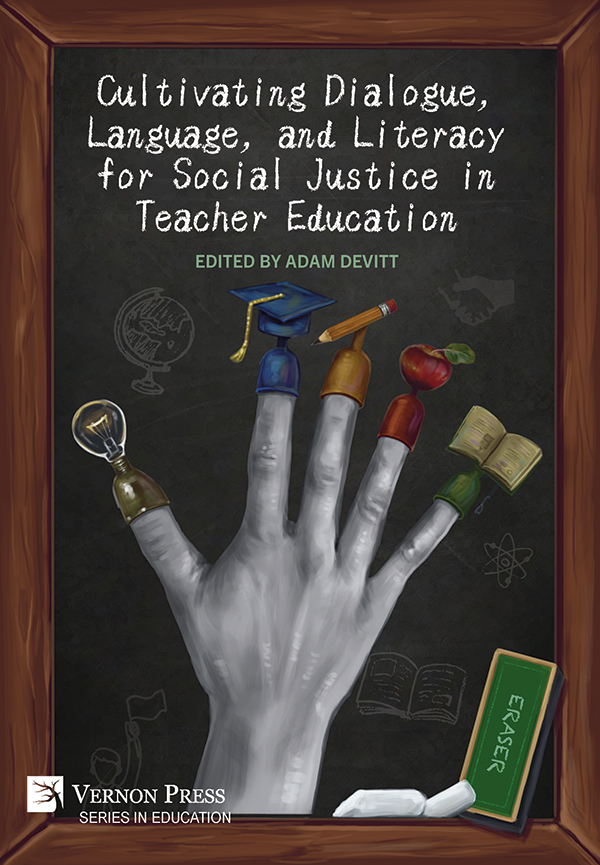
Within sociocultural traditions, language, dialogue, and social literacies play an institutional role in learning and human development. Discourse practices, however, go far beyond the traditional focus of using speaking and listening to support the learning of content knowledge. Teacher discourse practices ought to promote critical literacies and linguistic practices, and promote anti-racism and social and environmental justice. Classroom discourse, however, is missing from teacher education programs on a large scale in these significant ways. Teacher educators need to understand the social and political policies, pedagogical role, and multitude of practices for helping pre-service teachers and teacher practitioners learn to acquire and facilitate quality discursive practices in K-12 schools and understand related pedagogy. This book, ‘Cultivating Dialogue, Language, and Literacy for Social Justice in Teacher Education’, offers a variety of models for integrating discourse practices and pedagogies into the field of teacher education, including pre-service teaching, professional development, and even critiques on policy and subsequent affordances and consequences that inhibit or promote the quality of teacher discourse and the purposes for which teachers utilize classroom discourse. I would recommend this book for teacher education programs as well as professional developers who work with pre- and in-service teachers. Additionally, I recommend this book for researchers committed not only to classroom discourse analysis, but to promote speaking and listening among teachers and students in ways that enhance learning and development.
Sydney Basile, Odirin Omiegbe, Randy R. James, Ryann N. Shelton, Casey M. Newberry, Cristina Dumitru, Amy Sloan, Amy McConnell, Peter JO Aloka, Yaneth Eugenia Villarroel Ojeda, Vicky A. Richings, Simon Bibby, Lloyd Harrison Shenefelt IV, Ye Li, Xiali Chang, Rebecca G. Harper, Sameh Ibrahim, Thomas Basile, and Clara Maria Di Gennaro
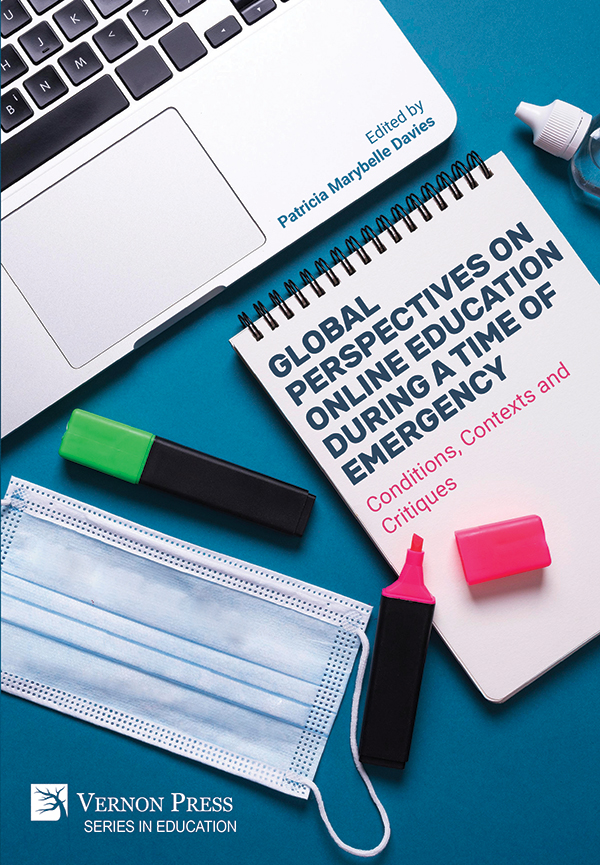
‘Global Perspectives on Online Education During a Time of Emergency’ presents viewpoints on the unprecedented shift to online education as a result of the COVID-19 pandemic. It aims to broaden and deepen readers’ understanding of studies that could better address academic issues related to teaching and learning online. The pandemic triggered the disruption of national educational systems and a rapid transition to online education, but there were few guidelines on how to proceed. Consequently, the role of educational technologies and distinctions between formal and informal learning became blurred (Greenhow & Lewin, 2016). This volume examines how educators adopted new pedagogical practices, adapted to flexible working environments, and tackled new technologies to maintain educational systems following the global outbreak of the coronavirus. It showcases innovative practices and critiques several learning theories of online education. The chapters are developed using two main approaches: empirical investigations and reviews of existing research. The empirical chapters present significant new findings of broad relevance. The review chapters use established studies to describe recent developments of broad significance and highlight unresolved questions and future directions. The volume, as a whole, provides research-based insights on evidence on the contexts and conditions of the emergency transition to online education worldwide and useful recommendations on emergent directions in online education. This is a vital text for educational researchers, technologists, and practitioners. It includes empirical data, theoretical questions, and methodological approaches addressing online education. The volume explores flexible learning, alternative pedagogical practices, and changes in digital environments, examining futuristic approaches at a crucial moment of global reform in online education.