Loading...
Please wait while we load the content...

Loading...
Please wait while we load the content...
Institute for European Studies, Serbia; Institute of Applied Ethics, University of Hull, UK
Sanja Ivic, Sarah Alwahaibi, Oriana Casasola, Gerard McCormack, Melanie Louise Brown, Hazel Lobo, Gregory Messenger, Michiel Poesen, Nikos Skoutaris, Martina Künnecke, Vincent Lagarde, Valentina Di Pietro, and Alessandro Liotta
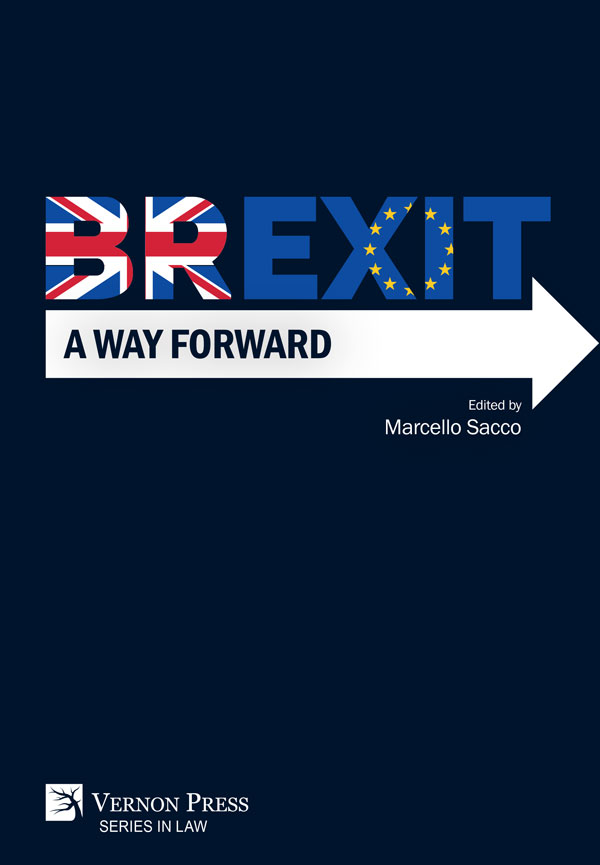
The outcome of the European Union membership referendum in 2016 has presented the United Kingdom with one of its greatest challenges of modern times. As negotiations for an exit strategy continue, this volume looks to open up conversations on the socio-legal implications of such a monumental transition. Aimed at addressing issues relating to Brexit that affect every aspect of British society, this book seeks to not just list the problems but to offer viable solutions for “the way forward”. Divided into three parts, this book presents a comprehensive yet accessible discussion of the impact of Brexit on the United Kingdom. Part I brings together three social studies that reveal that Brexit may be the result of international nationalist narratives, and that the choice to leave the EU is already affecting Brits abroad and the future opportunities for British students. Part II turns its attention to national legal issues that are affected such as the Irish border, waste management, moral copyright, and the support of local enterprises. Lastly, Part III investigates commercial law touching on important topics such as international litigation, insolvency and tax law. As this publication suggests eventual solutions to several issues caused by Brexit, it may be of interest to not only other academics working in the field, but also to policy makers and relevant stakeholders.
Sanja Ivic
The modern liberal idea of citizenship is constructed by a fixed notion of identity which gains meaning through a number of binary oppositions, such as we/ they, citizen/ foreigner, self/ other and so forth. Defined by these binaries, where the first term is perceived as dominant because it is considered to be derived from reason, the fixed notion of identity inevitably produces exclusion and marginalization. Importantly, the postmodern concept of citizenship stems from a critique of these essentialist and universalist conceptions of identity. Exploring European identity and European citizenship from a philosophical perspective, this book reveals the discursive construction of these two concepts whilst at the same time attempting to define them as either modernist or postmodernist categories. Dr. Ivic takes a hermeneutic approach in her interpretation of European citizenship and identity through a close reading of European treaties and other official documents. Through her detailed analysis, Dr. Ivic is able to present the reader with well-informed and concrete examples of modern and postmodern concepts of identity within Europe. Moreover, this book explores the impact that contemporary issues such as Brexit, the migration crisis in Europe, and the proliferation of nationalist discourses, have on European citizenship and identity. Where existing research literature has failed, this book offers a dynamic and textual analysis of citizenship that takes into account the complex philosophical, legal, political and theoretical background of Europe. Dealing with issues that have not yet been sufficiently explored, ‘EU Citizenship’ is an important contribution to the field of philosophical analysis. Aimed at university students, this book will also provide a baseline and set of reference points for researchers and practitioners of European studies that are working with projects that look at European citizenship.