Loading...
Please wait while we load the content...

Loading...
Please wait while we load the content...
University of Pretoria, South Africa
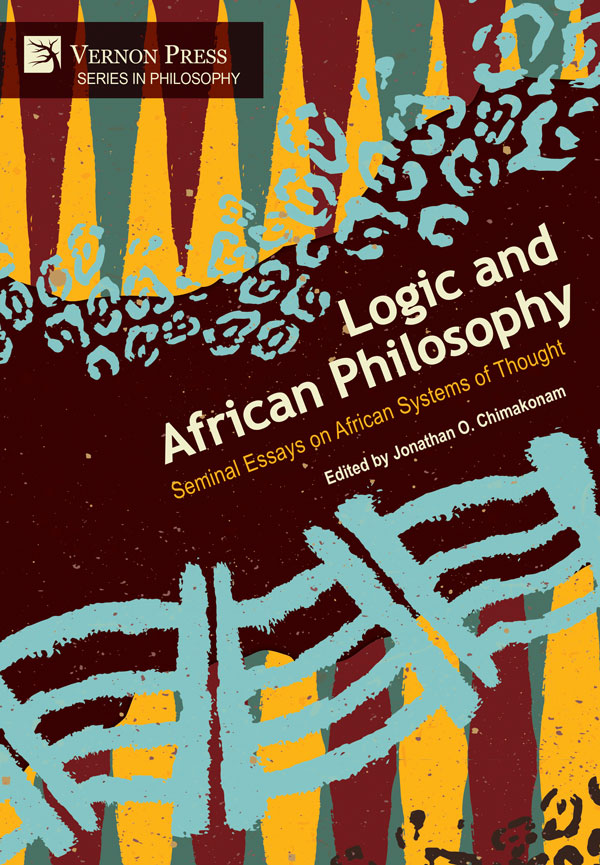
Seminal Essays on African Systems of Thought
Innocent I. Asouzu, Uduma, O. Uduma, Udo Etuk, Campbell Shittu Momoh, Chris O. Ijiomah, Keanu Koketso Mabalane, Ademola Kazeem Fayemi, Chukwuemeka B. Nze, Godwin Sogolo, J. E. Wiredu, Robin Horton, Leopold Sedar Senghor, Meinrad Hebga, Edwin Etieyibo, and Jonathan O. Chimakonam
“Logic and African Philosophy: Seminal Essays on African Systems of Thought” aims to put African intellectual history in perspective, with focus on the subjects of racism, logic, language, and psychology. The volume seeks to fill in the gaps left by the exclusion of African thinkers that are frequent in the curricula of African schools concerning history, sociology, philosophy, and cultural studies. The book is divided into four parts that are preceded by an introduction to link up the essays and emphasise their sociological implications. Part one is comprised of essays that opened the controversy of whether logic can be found in traditional African cultures as well as other matters like the nature of the mind and behaviour of African peoples. The essays in part two are centred on the following question: are the laws of thought present in African languages and cultures? Part three brings together essays that sparkle the debate on whether there can be such a thing as African logic, which stems from the discussions in part two. Part four is concerned on the theme of system-building in logic; contributions are written by members of the budding African philosophy movement called the “Conversational School of Philosophy” based at the University of Calabar, and the main objective of their papers is to formulate systems of African logic.
Leonhard Praeg, Ada Agada, Emmanuel Chukwudi Eze, Akiode Olajumoke, Uduma O. Uduma, Oladele A. Balogun, Uchenna L. Ogbonnaya, Michael Onyebuchi Eze, Bruce B. Janz, Mogobe B. Ramose, Victor C. A. Nweke, Edwin Etieyibo, Jonathan O. Chimakonam, and Adeshina Lanre Afolayan
This collection is about composing thought at the level of modernism and decomposing it at the postmodern level where many cocks might crow with African philosophy as a focal point. It has two parts: part one is titled ‘The Journey of Reason in African Philosophy’, and part two is titled ‘African Philosophy and Postmodern Thinking’. There are seven chapters in both parts. Five of the essays are reprinted here as important selections while nine are completely new essays commissioned for this book. As their titles suggest, in part one, African philosophy is unfolded in the manifestation of reason as embedded in modern thought while in part two, it draws the effect of reason as implicated in the postmodern orientation. While part one strikes at what V. Y. Mudimbe calls the “colonising structure” or the Greco-European logo-phallo-euro-centricism in thought, part two bashes the excesses of modernism and partly valorises postmodernism. In some chapters, modernism is presented as an intellectual version of communalism characterised by the cliché: ‘our people say’. Our thinking is that the voice of reason is not the voice of the people but the voice of an individual. The idea of this book is to open new vistas for the discipline of African philosophy. African philosophy is thus presented as a disagreement discourse. Without rivalry of thoughts, Africa will settle for far less. This gives postmodernism an important place, perhaps deservedly more important than history of philosophy allocates to it. It is that philosophical moment that says ‘philosophers must cease speaking like gods in their hegemonic cultural shrines and begin to converse across borders with one another’. In this conversation, the goal for African philosophers must not be to find final answers but to sustain the conversation which alone can extend human reason to its furthermost reaches.
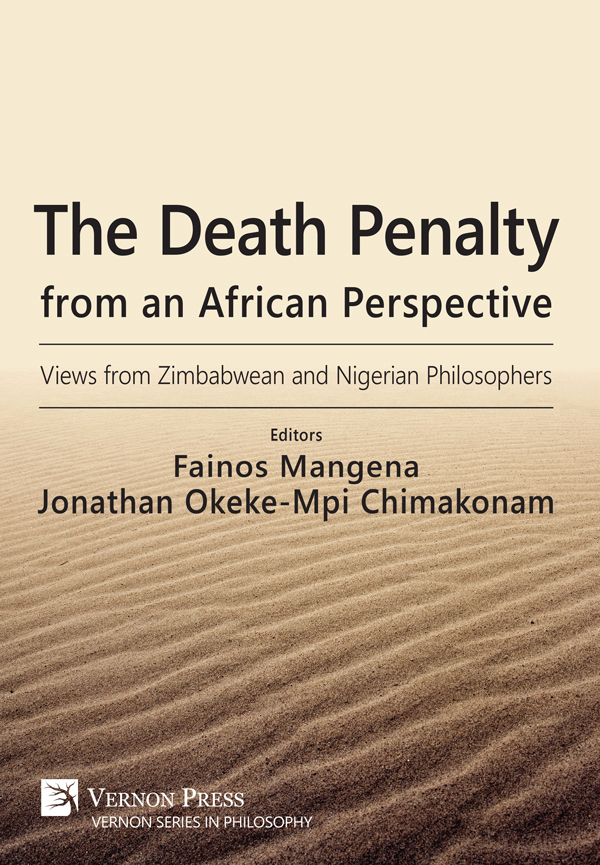
Views from Zimbabwean and Nigerian Philosophers
Chipo M. Hatendi, Jonathan O. Chimakonam, Benjamin Gweru, Joyline Gwara, Tatenda Mataka, Victor C. A. Nweke, Clive Tendai Zimunya, Isaiah Munyiswa, Alex Munyonga, Adebayo Aina, Christian Chukwuka Emedolu, Tarisayi Andrea Chimuka, Uduma Oji Uduma, Ngoni Makuvaza, Francis Machingura, Christopher Agulanna, and Fainos Mangena
This book is about an African philosophical examination of the death penalty debate. In a 21st century world where the notion of human right is primed, this book considers the question of the death penalty in two sub-Saharan African countries namely, Zimbabwe and Nigeria, notorious for their poor human right records. This edited collection comprises of 11 essays from Zimbabwean and Nigerian philosophers. As opinions continue to divide over the retention or abolition of the death penalty, these African philosophers attempt to localise this debate by raising the following questions: What is the meaning of life in the African place? Is it proper to take the human life under any guise at all? Who has the right to take the human life? Can the death penalty be justified on the bases of African cultures? Why should it be abolished? Why should it be retained? Indeed, this book is the first of its kind to engage the tumultuous issue of capital punishment in the postcolonial Africa and from the African philosophical point of view.