Loading...
Please wait while we load the content...

Loading...
Please wait while we load the content...
VIT-AP University
J. Brian Huffling, Andrew M. Davis, C. A. McIntosh, Tyler Dalton McNabb, Ebua Jarvis Ebua, Oscar Blanco, Rakhat Abylkasymova, Konrad Szocik, Steven J. Firth, Sergey V. Sychov, Eric Michael Mazur, Anil Singh Matoo, Steven D. West, Yury Tikhonravov, Pitshou Moleka, Amar Ramesh Wayal, and Anupama A. P.
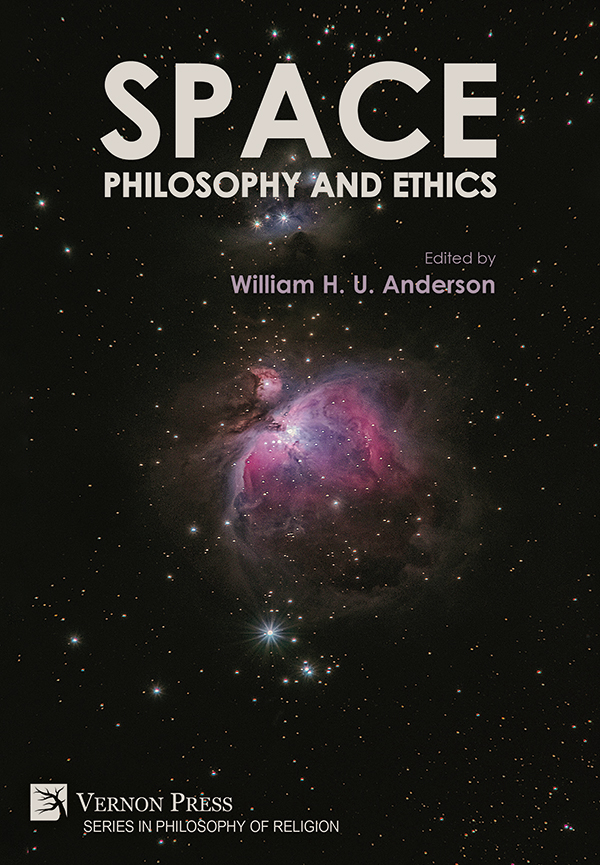
Space is infinitely interesting! Space has both scientific and cultural currency because it has captured the imagination of human beings from ancient times until today. What seemed like science fiction centuries and only decades ago, is now science fact. Technological developments present and on the cusp are putting more and more of space into our hands. That is both exciting and frightening at the same time (think Lovecraft)! This book attempts to speak to the philosophical and ethical issues raised by space. Who owns space? Who should pay for space exploration and what is the impact on human beings on earth today? What happens if we’re not alone in the universe? What is the value and meaning of space exploration? What are the ethical implications of AI and Technology in relation to space exploration (what if they get away from us?!)? Questions! Questions! Questions! The Call for Chapters for this book Space, Philosophy and Ethics read: “For space science people, this conference is a platform to discuss the subconscious philosophical and ethical implications of their research that have been in the back of their minds while researching. For philosophers and non-specialists, it is an opportunity to learn together and struggle to find solutions for the philosophical and ethical quandaries that space science, exploration and technology present to humanity”. The approaches to space seem endless. Physics, as Aristotle discovered, inevitably leads to metaphysics, and metaphysics always have ethical concerns. The book loosely follows this outline. It begins and ends with the metaphysical implications of space, the spiritual, if you will. It leads with poetry. That seems appropriate since while we may ask many questions regarding space, we are likely to find very few answers. Then the book briefly looks at the ethical implications of AI and Technology for space exploration. There are chapters that deal with the material ethics of space commerce and ontology. Telos and Axiology (Value) are also explored. This book hopes to facilitate human struggle with the ethical implications of space rather than presuming to solve all its problems.

Anik Sarkar, William H. U. Anderson, Amar Ramesh Wayal, D. Y. Turner, Issei Takehara, Drew Richardson, Alberto Oya, Devon P. Levesque, Martin Lepage, Graham Lee, Tara Etherington, Michelle Chan, Christopher Smith, Barışkan Ünal, Anupama A. P., Steven Foertsch, and Kaz Hayashi
Anime is exploding on the worldwide stage! Anime has been a staple in Japan for decades, strongly connected to manga. So why has anime become a worldwide sensation? A cursory explanation is the explosion of online streaming services specializing in anime, like Funimation and Crunchyroll. Even more general streaming services like Netflix and Amazon have gotten in on the game. Anime is exotic to Western eyes and culture. That is one of the reasons anime has gained worldwide popularity. This strange aesthetic draws the audience in only to find it is deeper and more sophisticated than its surface appearance. Japan is an honor and shame culture. Anime provides a platform to discuss “universal” problems facing human beings. It does so in an amazing variety of ways and subgenres, and often with a sense of humor. The themes, characters, stories, plotlines, and development are often complex. This makes anime a deep well of philosophical, metaphysical, and religious ideas for analysis. International scholars are represented in this book. There is a diversity of perspectives on a diversity of anime, themes, content, and analysis. It hopes to delve deeper into the complex world of anime and demonstrate why it deserves the respect of scholars and the public alike.