Loading...
Please wait while we load the content...

Loading...
Please wait while we load the content...
St. John Fisher College in Rochester, New York and Bertrand Russell Society
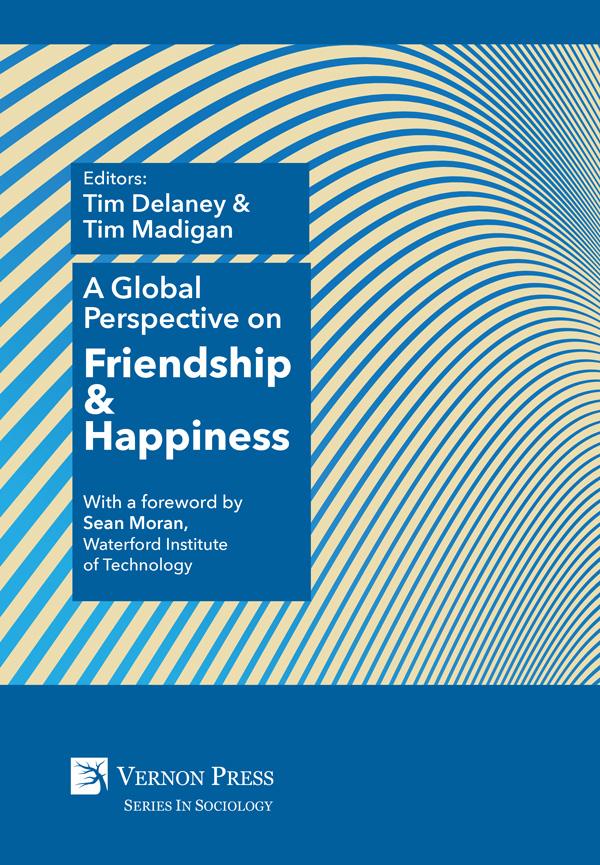
Bina Nir, Elisabeta Radu, Jocelyn Ahlers, Ranjeeta Basu, Ivaldo Gonçalves de Lima, Rejane Cristina de Araujo Rodrigues, Andrea-Mariana Marian, Ioana Duta, Warner Woodworth, Nurul Huda Mohd Razif, Karinya Ghiara, Søren Harnow Klausen, Francesca Pullano, Adele Ryan McDowell, Daria Gorlova, Rita Dirks, Elena-Lidia Dinu, Ali Çaksu, Anastasia Malahova, Tim Delaney, Tim Madigan, and Fiona O'Hanlon
In A Global Perspective on Friendship and Happiness, editors Tim Delaney and Tim Madigan have organized a collection of original articles on the subjects of friendship and happiness. Each of these chapters offers a unique perspective and serves as worthy contributions to the field of friendship and happiness studies. The chapters found in this publication are the result of the "Happiness & Friendship" conference held June 12-14, 2017 at Mount Melleray Abbey, Waterford, Ireland. The contributing authors come from many diverse countries and academic disciplines thus enhancing this outstanding volume.
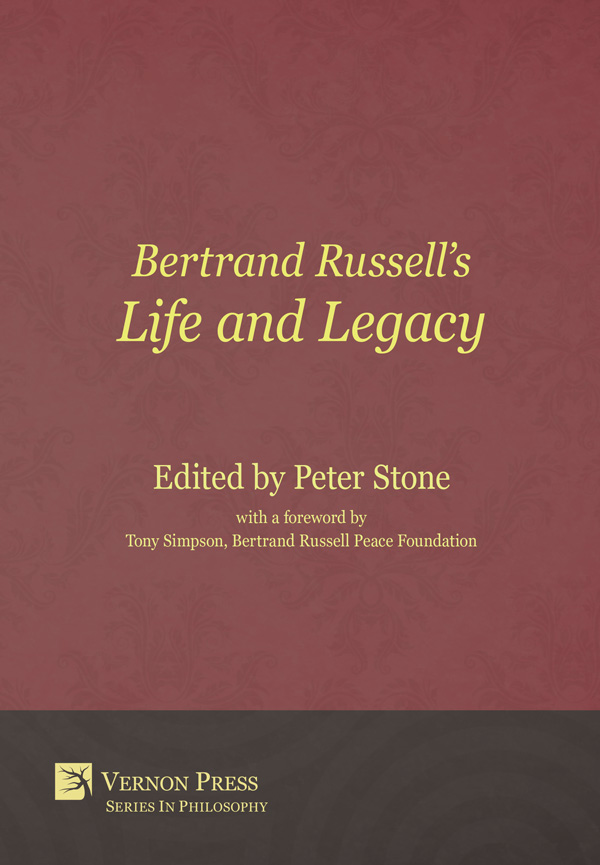
Nancy C. Doubleday, Tim Madigan, Nikolay Milkov, Alan Schwerin, Ádám Tamás Tuboly, Chad Trainer, Eileen O’Mara Walsh, Raymond Aaron Younis, and Peter Stone
Almost five decades after his death, there is still ample reason to pay attention to the life and legacy of Bertrand Russell. This is true not only because of his role as one of the founders of analytic philosophy, but also because of his important place in twentieth-century history as an educator, public intellectual, critic of organized religion, humanist, and peace activist. The papers in this anthology explore Russell’s life and legacy from a wide variety of perspectives. This is altogether fitting, given the many-sided nature of Russell, his life, and his work. The first section of the book considers Russell the man, and draws lessons from Russell’s complicated personal life. The second examines Russell the philosopher, and the philosophical world within which his work was embedded. The third scrutinizes Russell the atheist and critic of organized religion, inquiring which parts of his critical stance are worth emulating today. The final section revisits Russell the political activist; it directs an eye both at Russell’s own long career of peace activism, but also at his place in a highly political family tradition of which he was justifiably proud. This book thus constitutes an invitation, if one were needed, to the world of Bertrand Russell. Those new to Russell, but with an interest in biography, philosophy, religion, or politics, will hopefully find something to learn here. This may spark an interest in learning more about Russell. But this book is not just intended for the Russell neophyte. The book sheds fresh light on a number of topics central to Russell studies—his connections to other philosophers, for example. Scholars well-versed in Russell studies will enjoy grappling with the treatment given to these topics here.