Loading...
Please wait while we load the content...

Loading...
Please wait while we load the content...
Texas Woman’s University
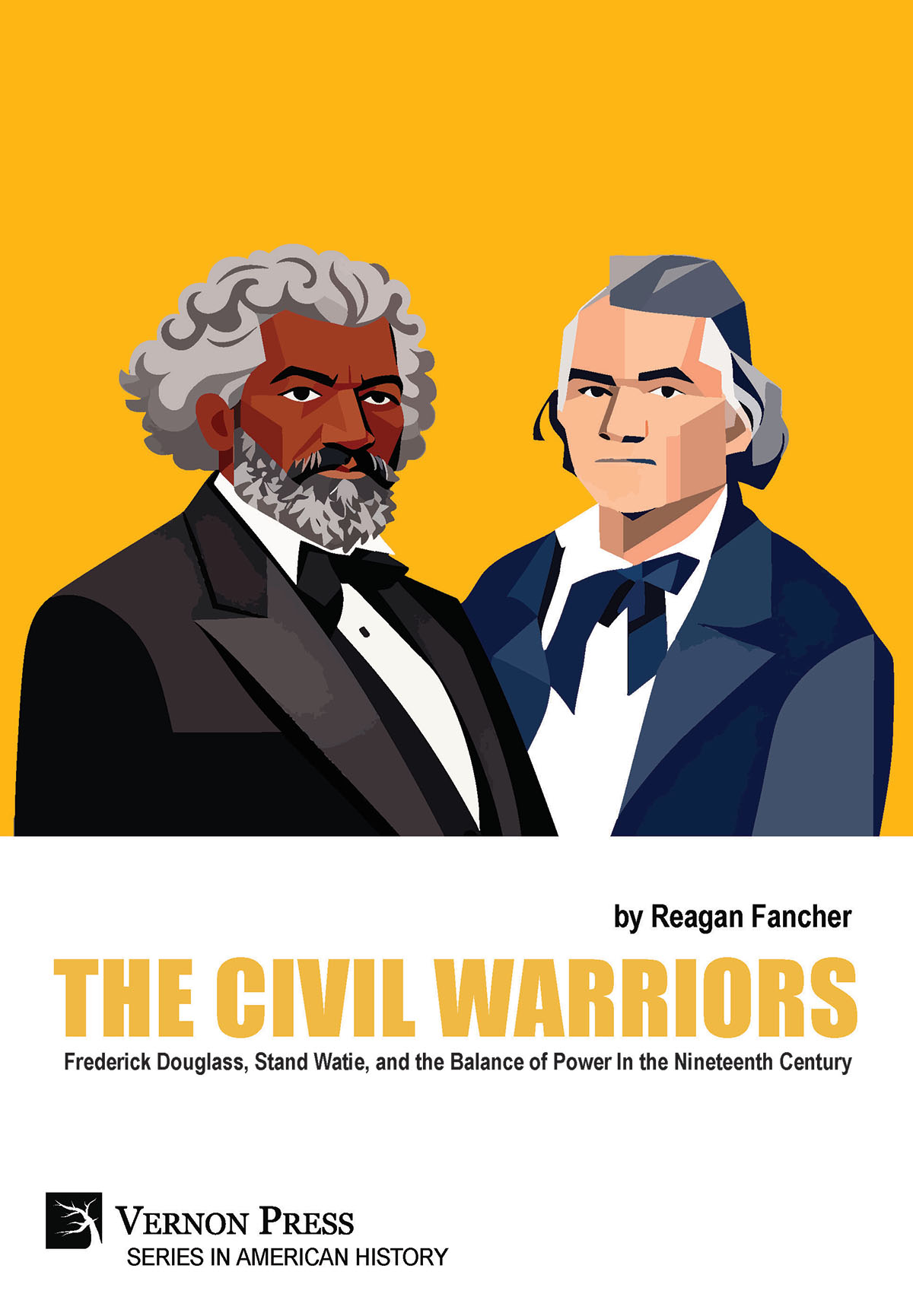
Frederick Douglass, Stand Watie, and the Balance of Power In the Nineteenth Century
Reagan Fancher
Frederick Douglass and Stand Watie, two men on opposite sides of the American Civil War, may seem to have little in common. Yet in 'The Civil Warriors', Reagan Fancher seeks to help students of American History understand the nuances of both men’s actions and decisions while calling attention to the striking similarities between Douglass, an abolitionist leader and adviser to President Abraham Lincoln, and Watie, a “mixed-blood” Cherokee slaveholder who became the last Confederate general to surrender. Despite their stark contrasts, these two men proved more similar than different in their character and courage in striving to aid their respective peoples. Douglass’s liberty message contributed to the enfranchisement of the freedmen and the breaking of political barriers, while Watie’s wisdom in laying aside his personal grievances against the Northern Cherokee rivals of his Southern Cherokee people helped heal the Cherokee Nation’s simmering sectarianism, reignited by the Civil War and paved the way for intratribal peace. In contrast to previous works, 'The Civil Warriors' examines the wartime and postwar lives and actions of both Douglass and Watie in a single volume for the first time, calling scholars’ attention to the similar paths on which each man embarked in serving his respective republic. Through this book, Fancher seeks to both inform collegiate-level students about Watie and Douglass’s lasting contributions that often seem to be overlooked or underemphasized in many other recent works and provide a useful classroom teaching tool for scholars while exploring both men’s lives and legacies. Revisiting and rebutting some popular misperceptions of each man, the book also fills a gap in Watie scholarship and seeks to both inform and inspire casual readers and scholars alike, bringing together those of different perceptions of the Civil War and Reconstruction and guiding today’s Americans in casting aside their differences and working together.

Reagan Fancher
Through U.S. President Franklin D. Roosevelt’s Lend-Lease program, American leaders sought to keep Joseph Stalin’s Red Army in the field and fighting Adolf Hitler’s forces in the Second World War from 1941 forward. Delivered by the Anglo-American Arctic naval convoys, overland through the Iranian deserts and mountains, and through the skies from Alaska to Siberia, this much-needed material aid helped Stalin’s Red Army to continue fighting and thereby prevented a separate peace with Hitler’s Germany and a mechanized repeat of the First World War’s Brest-Litovsk fiasco. Yet Roosevelt and other U.S. officials, due to their severe underestimation of Stalin’s character and his rigid and fanatical devotion to exporting Communism at gunpoint, gambled incorrectly that they could win the Soviet premier’s heart and mind through several excessive wartime aid gestures, including the furnishing of atomic bomb materials to the Soviet regime. By 1945, American leaders had succeeded in their strategic goal of keeping Stalin and his Red Army in the war and hastening victory but failed in their efforts to purchase the Soviet premier’s goodwill and commitment to postwar peace, heralding the global Cold War, and setting the stage for later U.S. martial aid programs to those resisting aggression abroad. In addition to its primary focus on the American leadership’s perceptions of Stalin’s strategic importance to the Allied war effort in the Second World War, this work also includes a detailed assessment of Roosevelt’s Soviet Lend-Lease program alongside U.S. President Ronald Reagan’s later support for the Afghan Islamic guerrillas resisting Soviet occupation during the Soviet-Afghan War of the 1980s and a comparison of both martial aid programs with Washington’s recent revival of Lend-Lease aid for the Ukrainian war effort. It offers today’s American leaders and policymakers a chance to consult the lessons of history and apply them in the present.

2nd Edition
Reagan Fancher
Fought between 1979 and 1989, the Soviet-Afghan War provided vital combat experience for Osama bin Laden and his senior lieutenants in al-Qaeda, allowing them to hone their newly acquired skills in guerrilla warfare to later support Islamist insurgencies worldwide. Yet the ruthless al-Qaeda chief’s success depended on the Soviet leadership’s reluctant prolonging of its military occupation out of fear of leaving Afghanistan in hostile hands. As relative latecomers to the ferocious Afghan frontlines, the inexperienced Arab fighters benefitted militarily from the combat training unwittingly provided by their Soviet foes. After skillfully obtaining this command and battle experience by working within the wartime atmosphere, bin Laden channeled al-Qaeda’s efforts in a global jihadi campaign targeting a second superpower and its allies. While allegations of U.S. support for the Arab jihadis have contributed to a popular image of bin Laden and al-Qaeda as C.I.A. creations, the historical facts appear to demonstrate that the combat opportunities provided by the Soviet occupation forces played a far larger role in transforming them into seasoned guerrilla fighters. In this second edition, Reagan Fancher updates and expands his monograph in an Afterword elaborating on the contemporary U.S.-U.K. perceptions of bin Laden's wartime actions and their results as he applied his battle-honed guerrilla tactics, judo skills, and recruitment capabilities in tactically helping Yemen's anti-communist Salafi guerrillas to emerge victoriously in their country's 1994 Civil War before concluding with an assessment of the founding al-Qaeda leader's impact on history. It offers an opportunity for today's decision-makers to learn from history and avoid creating new generations of Osama bin Ladens.
Reagan Fancher
Fought between 1979 and 1989, the Soviet-Afghan War provided vital combat experience for Osama bin Laden and his senior lieutenants in al-Qaeda, allowing them to hone their newly acquired skills in guerrilla warfare to later support Islamist insurgencies worldwide. Yet the ruthless al-Qaeda chief’s success depended on the Soviet leadership’s reluctant prolonging of its military occupation out of fear of leaving Afghanistan in hostile hands. As relative latecomers to the ferocious Afghan frontlines, the inexperienced Arab fighters benefitted militarily from the combat training unwittingly provided by their Soviet foes. After skillfully obtaining this command and battle experience by working within the wartime atmosphere, bin Laden channeled al-Qaeda’s efforts in a global jihadi campaign targeting a second superpower and its allies. While allegations of U.S. support for the Arab jihadis have contributed to a popular image of bin Laden and al-Qaeda as C.I.A. creations, the historical facts appear to demonstrate that the combat opportunities provided by the Soviet occupation forces played a far larger role in transforming them into seasoned guerrilla fighters. In contrast to the dozens of previous works on bin Laden and al-Qaeda, this book is the first to focus primarily on the Soviet-Afghan War’s impact on training the Arab fighters from Yemen, Saudi Arabia, and elsewhere, in battle, and preparing them to export their guerrilla war to assist their comrades in their native countries. As a teaching tool that re-examines and clarifies the impact of bin Laden’s wartime actions, this book will be particularly useful to scholars of history and international relations seeking to acquire and spread new knowledge in the classroom and to better understand the origins of al-Qaeda’s deadly skills and martial resilience. It offers an opportunity for today’s decision-makers to learn from history and avoid creating new generations of bin Ladens.