Hardback
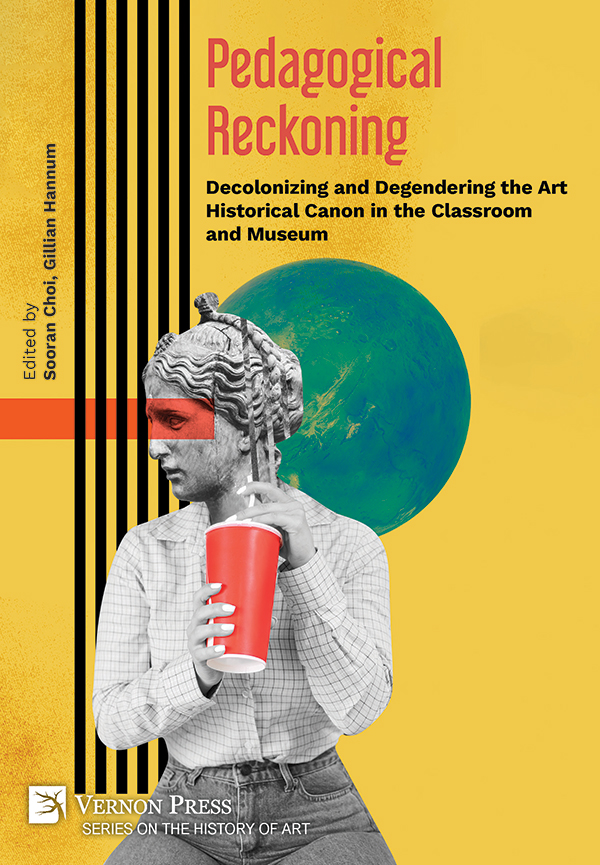
Pedagogical Reckoning: Decolonizing and Degendering the Art Historical Canon in the Classroom and Museum
Victor Pitsoe, Bokyung Kim, Gillian Greenhill Hannum, Sooran Choi, Kyunghee Pyun, Nancy Eder, Kelsey Frady Malone, Yan Yang, Ila Sheren, Anna Jozefacka, Malka Simon, Francesca Liuni, Laura Phillips, and Ace Lehner
'Pedagogical Reckoning: Decolonizing and Degendering the Art Historical Canon in the Classroom and Museum' brings together leading voices in art history, museum studies, and pedagogy to confront the Eurocentric and patriarchal foundations of traditional art historical education. This timely anthology provides a range of actionable strategies for reshaping curricula, exhibitions, and research through the lenses of decoloniality, gender justice, and global inclusion.
Edited by Sooran Choi and Gillian Greenhill Hannum, the volume includes contributions from scholars, artists, and educators across institutional contexts—from large research universities to community colleges and art schools. Its chapters span three key areas: inclusive classroom pedagogy, critical museum and curatorial practice, and decolonial research methodologies. Essays explore intersectional frameworks informed by postcolonial theory, feminist critique, queer studies, and ethnic studies, while also providing practical tools such as sample assignments, case studies, and curatorial models.
Uniquely, this anthology integrates scholarly analysis with pedagogical reflection, offering readers both conceptual frameworks and concrete applications. It builds on recent literature such as 'Teaching South and Southeast Asian Art' and 'Expanding the Parameters of Feminist Artivism', while extending the conversation through its focus on classroom agency, community-responsive teaching, and institutional reckoning.
Ideal for art history instructors; museum professionals; and students in anthropology, cultural studies, and education, 'Pedagogical Reckoning' serves as both a critical resource and a methodological guide. It is suitable for classroom adoption, professional development, and curriculum planning, and will appeal to anyone committed to transforming the way we teach, curate, and write about art.