Loading...
Please wait while we load the content...
Loading...
Please wait while we load the content...

Explore peer - reviewed titles across the humanities and social sciences - rigorous research, fresh perspectives, and scholarship that inspires dialogue across disciplines.
Stay informed about our latest publications, calls for proposals, and special announcements. As a subscriber, you'll also enjoy exclusive member discounts of 10%-20% on all orders. Join our community of scholars, librarians, and readers today.

From special discounts and global distribution partners to downloadable catalogs, flyers, and high-resolution covers, we make it easy to enrich your library’s collection. Access bibliographic data, explore subject-specific listings, and stay updated on forthcoming titles.
Become part of our librarian network and access dedicated tools, discounts, and resources to support collection development and promote new titles to your patrons.

Partner with Vernon Press to provide your customers with high-quality, peer-reviewed scholarship. We offer flexible ordering options, reseller agreements, and promotional materials to support your sales and outreach.

Vernon Press provides dedicated resources to help instructors adopt our books for courses and to support students with affordable access to high-quality scholarship. From desk and examination copies to tailored student editions, we aim to make our titles accessible in the classroom.
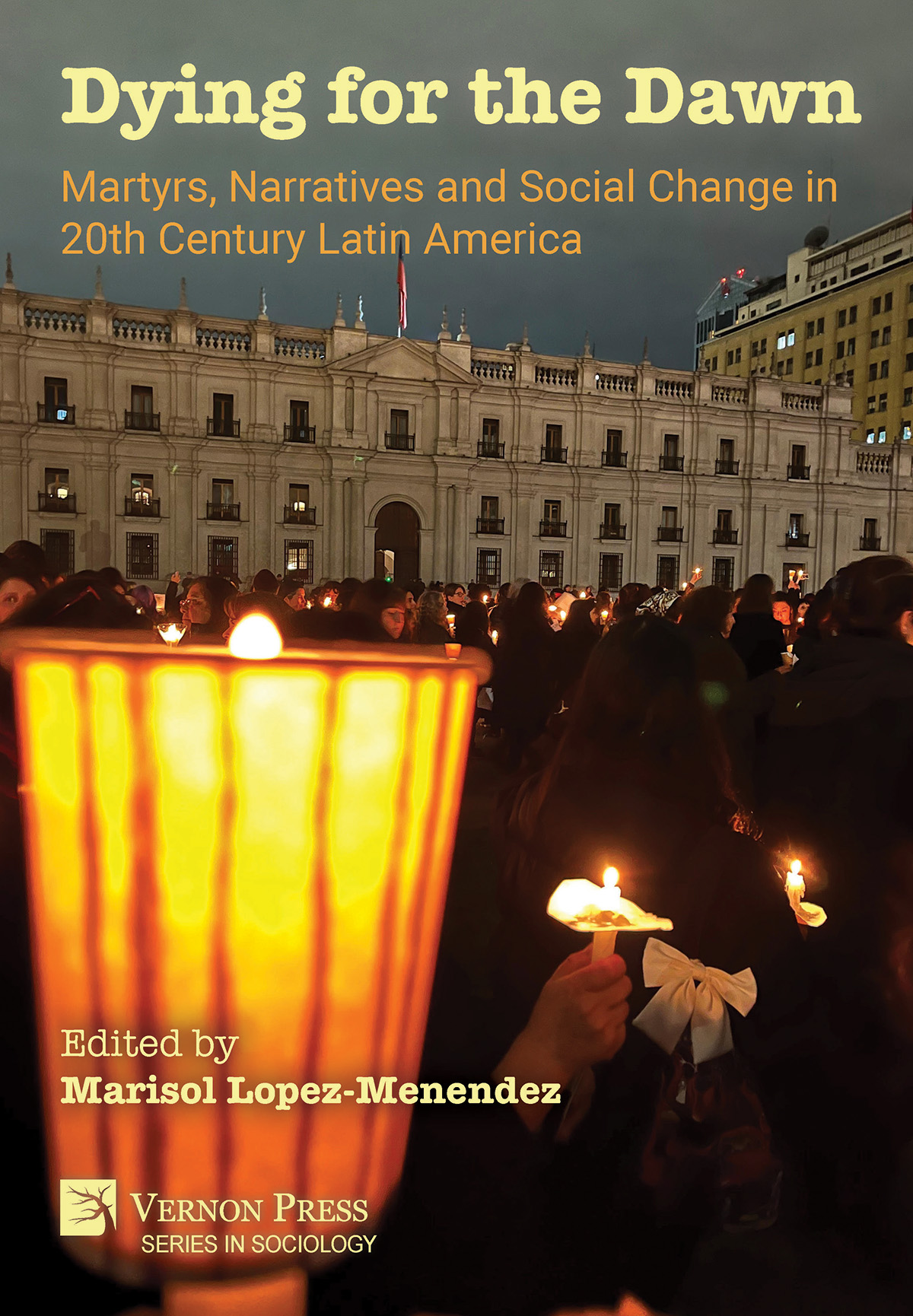
Martyrs, Narratives and Social Change in 20th Century Latin America
Marisol Lopez-Menendez, Fortunato Mallimaci, Oscar A. Castro Soto, Amilcar Carpio, Julia Young, Kristina Boylan, Andrew R. Murphy, María del Carmen Moreno-Cardenas, Paula Tesche, Yves Solis, Prepa Ibero, Boris Hau, Iliana Moreno Téllez, Gregory Swedberg, Paula Tesche Roa, Loreto Chandia Jara, Gabriel Figueroa Montero, and Eduardo Gusmao de Quadros
In a century stained by revolution, dictatorship, and neoliberal violence, ordinary men and women became extraordinary witnesses—dying so that others might live free. From the bullet-riddled Cristero battlefields of Mexico to the bloodied streets where Óscar Romero fell, from Chico Mendes’s Amazonian stand to the unmarked graves of Chile’s forgotten priests and the deadly migrant trails of today’s Via Crucis—this collection rewrites the meaning of martyrdom for our time. Edited by Marisol Lopez-Menendez, 'Dying for the Dawn' brings together leading scholars to reveal how martyrial stories are not relics of the past but living weapons: shaping politics, igniting social movements, redefining gender and memory, and challenging the very border between faith and resistance. Here you’ll meet worker-martyrs, children saints, environmental prophets, disappeared priests, and the “neo-liberal martyrs” dying at the hands of borders and cartels—figures whose deaths still fuel protests, pilgrimages, and demands for justice across Latin America and its diaspora. Blending riveting history, sharp sociology, and unflinching cultural analysis, this is the book that finally connects the dots between ancient sacrifice and today’s struggles for human rights, migration justice, and democratic dignity. Perfect for readers of liberation theology, Latin American history, religious studies, and anyone who believes that courage can outlast bullets.
Global Perspectives
Lefranc Joseph, Mariam John Meynert, Piyali Mitra, Moutan Roy, Ananya Chatterjee, Suchismita Das, Anusuya Moitra, Arpita Mukherjee, Sandy Larose, Pranav Piyush Sharma, Debolina Banerjee, and Ghislain Leroy
This work offers a comprehensive exploration of how childhood and youth are understood within contemporary social theory, emphasizing the major intellectual shifts that have transformed these fields over the past three decades. Moving beyond traditional developmental perspectives that portrayed children as passive recipients of socialization and youth as a brief transition to adulthood, the text draws on the “new social studies of childhood” and critical youth studies to argue that both childhood and youth are socially constructed categories. Rather than universal or biologically fixed stages, they are shaped by historical contexts, institutional arrangements, and unequal power relations. Central to the analysis is the concept of cultural politics, which highlights how meanings, identities, and representations of children and young people are produced, circulated, and contested. The work demonstrates how media narratives, state policies, educational systems, and global market forces frame childhood and youth in contradictory ways—at times idealizing them as innocent and hopeful, and at other times depicting them as deviant, risky, or problematic. Such representations are shown to reflect broader ideologies of nationhood, gender, modernity, and economic productivity. The text further underscores the importance of intersectionality, explaining how class, caste, race, gender, sexuality, disability, language, and nationality intersect to shape diverse and unequal experiences of growing up. It also examines the impact of globalization, neoliberal economic restructuring, migration, and digital technologies in reshaping young lives, generating both new opportunities and new vulnerabilities. Importantly, the work foregrounds agency, emphasizing that children and youth actively negotiate, reinterpret, and sometimes resist structural constraints in everyday contexts. By integrating insights from sociology, education, psychology, and cultural studies, the volume advances an interdisciplinary, decolonial, and context-sensitive framework for understanding the complex realities of childhood and youth in contemporary societies.

A tender revolt
Guido Cuyvers
In a world where people are living longer and healthier lives, 'Passionate Aging' offers a fresh, empowering perspective on what it means to grow older. This engaging and insightful book explores the opportunities, challenges, and responsibilities of aging, aiming to dispel stereotypes and inspire both individuals and society to reimagine the later stages of life. Through a mix of research, practical advice, and personal narratives, the book serves as a guide for making the most of our extended years.
Critical Responses to Challenges and Change
Author information not available
'Social Resilience: Critical Responses to Change and Challenges' is an edited volume intended for researchers and post-graduate students interested in studying social resilience from a multi-disciplinary, social scientific perspective. The volume consists of eight chapters that explore the concept from diverse disciplinary angles employing different theoretical and methodological approaches. Representing the fields of psychology, anthropology, social work, sociology of law, and legal studies, the authors discuss how social resilience manifests in different circumstances and contexts and what it means both in theory and practice. Thematically, these discussions concern migration, sexual minority experiences, environmental and economic crises, and the relationality and processuality of the concept as both an analytical tool and a unit of analysis in and of itself. Most research on social resilience follows the socio-ecological systems paradigm that defines (social) resilience as an ‘adaptive capacity’ to cope with and overcome adversities. While some chapters in this book adhere to this, others advocate for a more process-oriented and dynamic approach, focusing not so much on how people build resilience but rather how people act across time and space and in relation to others when facing disruptions to normalcy or outstanding crises. Here, the volume offers a tacit critique of the neoliberal model of conceptualizing resilience as a normative concept; an ideal way to be, and explains what research on resilience might look like if it instead centers on our continuous being.
Feminist Rage, Digital Activism and Gendered Violence in Southern Africa
Kutlwano B. L. Mokgwathi
This book explores gender-based violence in Southern Africa, specifically focusing on male violence against women, children, and the LGBTQ+ community. It examines how women in the Southern African Development Community (SADC) region, particularly in South Africa, utilize media technologies to mobilize, organize, raise political awareness, and amplify protests. Key to this discussion are hashtags such as #MenAreTrash, #AmINext, and #SayHerName, which shed light on various forms of violence, including intimate partner violence, community violence, and state violence. The book situates these practices within the historical contexts of colonialism and apartheid, framing violence as a communicative act that shapes everyday life in the region. It further links the practices of digital activism to broader traditions of social movements and feminist struggles. In agreement with African feminists, it posits that feminism on the continent is an action-oriented practice that arises from women’s collective efforts toward liberation. This viewpoint lays the groundwork for understanding digital Black feminism in Southern Africa as part of a larger trajectory of cyberfeminism and Black feminist theory. By utilizing the term Africana, the book stresses the connections between Africa and the African diaspora, emphasizing the significance of transnational linkages in ongoing struggles for liberation. The book explores the persistence of male violence and proposes practical solutions aimed at guiding policy development and promoting societal reform. As such, it represents a significant contribution to feminist scholarship and enriches the body of feminist literature from the SADC region by incorporating the advancements in media technologies in the pursuit of social justice.
A Southern Perspective
Adith K. Suresh, Sony Jalarajan Raj, Raewyn Connell, Tony Sebastian, Gilberto Nelson Macuácua Harilal, Gastón Carrasco Aguilar, José R. Torres Ramos, Edgar Manuel Bernardo, Andriamasinalivao Alyette, Yang Zhao, Sarah McDonald, Garth Stahl, Shadrick Chembe, Benjamin Kalkum, and Sebastián Madrid
'Men and Masculinities in the Global South: A Southern Perspective' is a pioneering collection that places Southern voices, practices, and contexts at the centre of global masculinities research. For too long, the field of Men and Masculinities Studies (MMS) has been shaped by theories generated in the Global North. This volume responds by foregrounding scholarship rooted in Africa, Latin America, Asia, and other Southern regions, showing that the Global South is not a periphery but a vibrant source of theoretical innovation and critical practice. Organised in two parts, the book moves from thematic analyses to regionally grounded case studies. Part I examines key issues such as the history of MMS in the North and South, male healthcare, violence, activism, music, and literature. Part II highlights the lived realities of masculinities (geography of masculinities) across Chile, India, Madagascar, Mozambique, Zambia, Uzbekistan, and Vietnam, among other locations, illustrating how local histories and political economies shape gendered experiences in diverse ways. Contributors engage both with established frameworks – such as Raewyn Connell’s Southern Theory, among others – and with fresh conceptual tools that expand comparative and transnational research. Equally distinctive is the book’s collaborative method. Emerging from an open call for chapters, it fosters an “invisible college” of scholars, activists, and practitioner-researchers working across disciplines, languages, and borders. This approach not only diversifies the field but also strengthens South–South and South–North exchanges in MMS. Accessible and rigorous, this collection will serve undergraduate and postgraduate students in Gender Studies, Sociology, Anthropology, Cultural Studies, Development, and Public Health. It is equally relevant for NGOs, educators, policymakers, and professionals engaged in gender justice, health, and violence prevention. As a reference text, teaching aid, and catalyst for new scholarship, 'Men and Masculinities in the Global South' affirms the South as an indispensable site of knowledge production and a driver of global debates on gender and social change.
Author information not available
In times of increased East-West confrontation and various global crises, it becomes increasingly clear that, for most people, the neoliberal restructuring of society has not resulted in greater freedom or a more self-determined lifestyle. Instead, we are experiencing a precarization of working and living conditions, rising isolation, and a widespread sense of political powerlessness linked to the rise of right-wing governments, nationalist, and far-right forces in recent years. In light of these developments, it is especially important to take an unbiased look at concepts and practical models for alternative social and political change and to reflect on what lessons can be learned from historical events for today’s politics. The Soviet example appears particularly instructive, as the October Revolution of 1917 marked the start of a period of profound change in which a fundamentally different culture and education system emerged in just a few months and years. As this volume’s contributions demonstrate, the complex transformation process in the early years of the Soviet Union involved both the creation of new elements and the preservation of old ones. As the interview with Kristen R. Ghodsee shows, figures like Alexandra Kollontai, through their progressive socialist theory and practice, brought about sweeping changes that extended beyond the sphere of production. They fundamentally transformed social life as a whole, especially gender relations, leading to significant improvements in living conditions – particularly for female workers – and achievements such as public childcare. The contributions and the interview with Dietmar Dath also explore the development of a new education system and the restructuring of art and culture, as well as their significance beyond the historical contexts in which they originated, continuing to influence today. Through this, the volume aims to open new perspectives on the legacy of Soviet education, gender, and cultural policies and to provide insightful analyses and materials for researchers in disciplines such as educational sciences, history, art and cultural studies, literature, social and political science, anthropology, philosophy, and gender studies.
Understanding Academic Experiences in US Higher Education
Kruti S. Chaliawala
Navigating the intricate landscape of U.S. higher education can be profoundly challenging for international students. This groundbreaking work offers a vital, dual perspective, interweaving deeply personal lived experiences with rigorous academic research to illuminate the multifaceted journey of cultural and academic adaptation. Beyond the author’s compelling narrative in the preface, the book shares personal stories, making complex challenges tangible and relatable. From dissecting the nuances of U.S. grading systems and academic culture to exploring complex social integration, language proficiency hurdles, and the pervasive challenges of “othering” and discrimination, this book provides an honest and comprehensive account. A unique focus is placed on the distinct barriers faced by female students from conservative cultural backgrounds, offering empathetic insight into their unique struggles with participation, social norms, and mental well-being. Distinguished by its blend of personal narrative and evidence-based solutions, this book transcends mere description. It critically examines the role of institutional support, advocating for culturally sensitive mentorship, inclusive classroom practices, tailored mental health services, and essential cultural competency training for faculty and staff. 'Cultural Influences and International Students' is an indispensable resource for current and prospective international students seeking to understand and prepare for their journey. It is also an essential guide for higher education professionals, including faculty, advisors, administrators, and policymakers, providing actionable strategies to foster truly inclusive environments. This work stands as a powerful call to action for transforming U.S. campuses into spaces where every international student can thrive academically and personally.
Domagoj Krpan, Joel Sronce, Maria D. Mitchell Franklin, Ali Emrah Tokatlioğlu, Antonio J. Pinto Tortosa, Emmanouil (Manos) Karousos, Sayandeb Chowdhury, Rajendran Narayanan, Roxane Coche, Amit Gupta, Tzachi Cohen, and David Webber
This collection of essays provides a multidimensional, interdisciplinary, creative, and colorful view on the meanings and possibilities of thinking football—'the beautiful game'—and its paramount event: the World Cup. It is intended to appeal to academics as well as to everyday experts, those for whom football is more than a sport. But it also wants to be a source that stirs the interest of those who see football just as a curious experience; those who may have heard, in passing, that a new World Cup will be played in the U.S., Canada, and Mexico in 2026. This book has, like a football team, eleven chapters. The approaches, styles, and perspectives differ considerably: From how football is a center piece in politics to its representations in poetry, from gender issues to nationalism, from fictitious wars to real ones provoked by a football match, and from exile to the neo-liberalization of the sport, the authors provide us a multicolor and global fresco of football and the World Cup. Likewise, the selection provides a global perspective on football and the World Cup: views from powerhouses such as England or Argentina, as well as from countries with a very incipient football tradition, such as India and Israel. 'World Cup! History, Politics, and Art of the Beautiful Game' is an invitation to continue to understand and think about one of the most important cultural manifestations of our times; a book that, particularly in the context of the next World Cup in 2026, will appeal to a broad readership, all around the world.