Loading...
Please wait while we load the content...

Loading...
Please wait while we load the content...
Universitat de Vic - ELISAVA
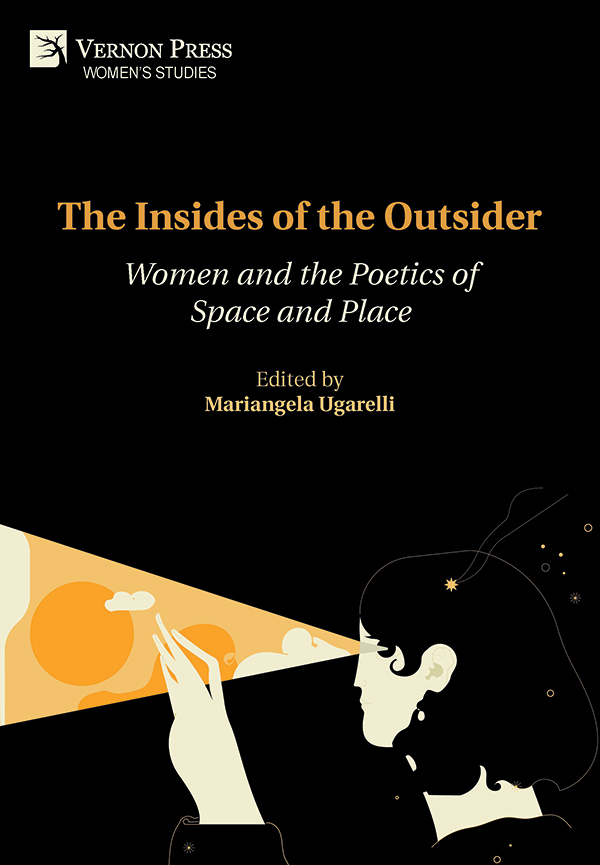
Victoria Mallorga Hernández, Liliana Galindo Orrego, Alexandra Arana Blas, Lisu Wang, Erna Anderson, Rachel Williams, Cecilia Esparza, Mariangela Ugarelli, Lauren Benjamin Mushro, Juan Diego Perez, and Jhonn Guerra Banda
When asked if being a woman had a negative impact on her ability to succeed as a writer, Argentine poet Alejandra Pizarnik stated that, even if not a physical impediment, being a woman in a patriarchal society is ‘a tragedy’ in itself. She followed this comment by saying: ‘What matters is what we do with our own tragedies’. Beyond sex assigned at birth, feminized bodies around the world share a similar phenomenological experience, which is dictated by a complicated relationship to space. Before setting pen to paper, the woman writer, a monster herself within patriarchal discourse, must confront the role society has set for her. For a writer in a feminized body, thus, the act of writing never begins with a tabula rasa but with a refusal and a challenge, an ushering out of the supposed ‘eden’ of the domestic. The question of the women-writer’s space is further exacerbated when considering matters of intersectionality. The poetics of space and place change within the confines of different geopolitical structures and their relations amongst each other. How do they shift when the center becomes de-centered and writing stems not from a place of political power but from the quieted voices of minor literature, queer and racialized bodies or subalternized latitudes? This volume will attempt to address these questions with input from a diverse group of scholars dealing with an equally diverse corpus. North and Latin America converse with Europe while ‘genre’ literature, minor literature and ‘gendered’ literatures take center stage. By taking into account a wide array of cultural objects, from poetry and children’s literature to Gothic tales and television shows, this collection of articles reveals the profound link between space and the female experience through the lens of art and literature.
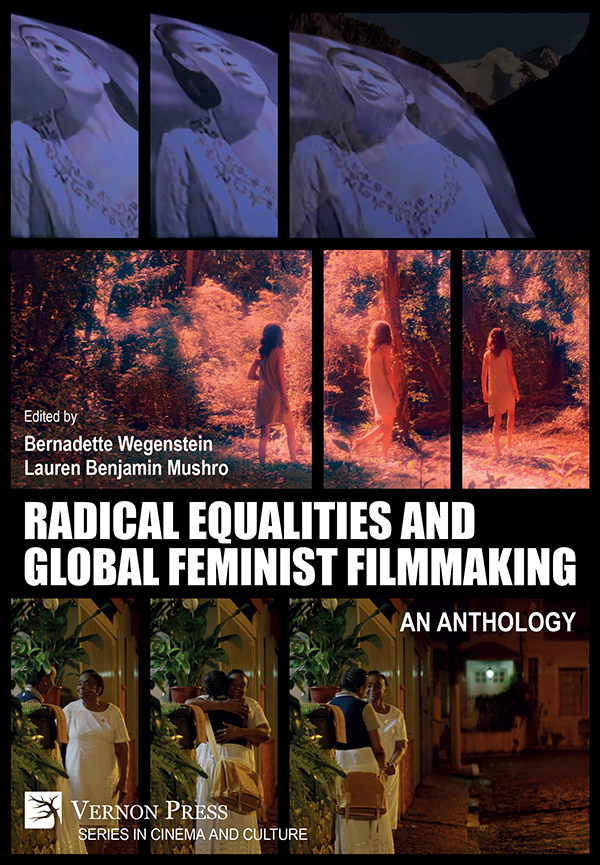
Laura Di Bianco, Lauren Benjamin Mushro, Rie Karatsu, Lúcia Monteiro, Patricia White, Livia Bloom, and Bernadette Wegenstein
Radical Equalities and Global Feminist Filmmaking - An Anthology’s main objective is to exhibit and unveil the fruit of the growing movement of feminist filmmakers around the world through interviews with current filmmakers themselves and through critical analysis of the works of these filmmakers. Every filmmaker we examine tells their own story about radical equality from a place that they have lived, are drawing from, or have imagined. The common theme in all of the films of our selected filmmakers is the obligation they feel towards the oppressed and the resulting ethics of interdependence their films exhibit. Some films give voice to those who are suffering in the shadows, or have been silenced and murdered because of their political orientation and work; some films showcase vulnerable identities (especially gender identities) because the characters are inter-sex, transgender, of a marginalised class and skin color, are being forced into a split identity because of a colonial history, or because they are living in a part of the world from which they cannot escape. Other films highlight the feminist experience of lesbian love and its constraints or revolutions, the experience of motherhood, and the question of origin in all of its complexities. The authors have, to date, conducted 16 interviews with filmmakers from around the world who, in very different ways - at times with comic relief , at times by pointing the cameras back at themselves, at times by inviting the viewer to grieve with them - question radical equality and vulnerability. We have selected these films on the basis of their unique stories and story-telling style, and their diverse points of view referencing different socio-political historical realities around the world. Each of them has one, if not several, female, intersex or non binary characters as their leads; each of them engage us with the question of feminism in a political way that highlights our obligation toward the character and her lived experience. Each of them focuses on “interdependence” as an aesthetic and cinematic principle. But what is most important is the fact that each filmmaker will be able to describe how they found their access and inspiration for their story, and how the film reflects on their own lived experience that is socio-economically and historically determined.